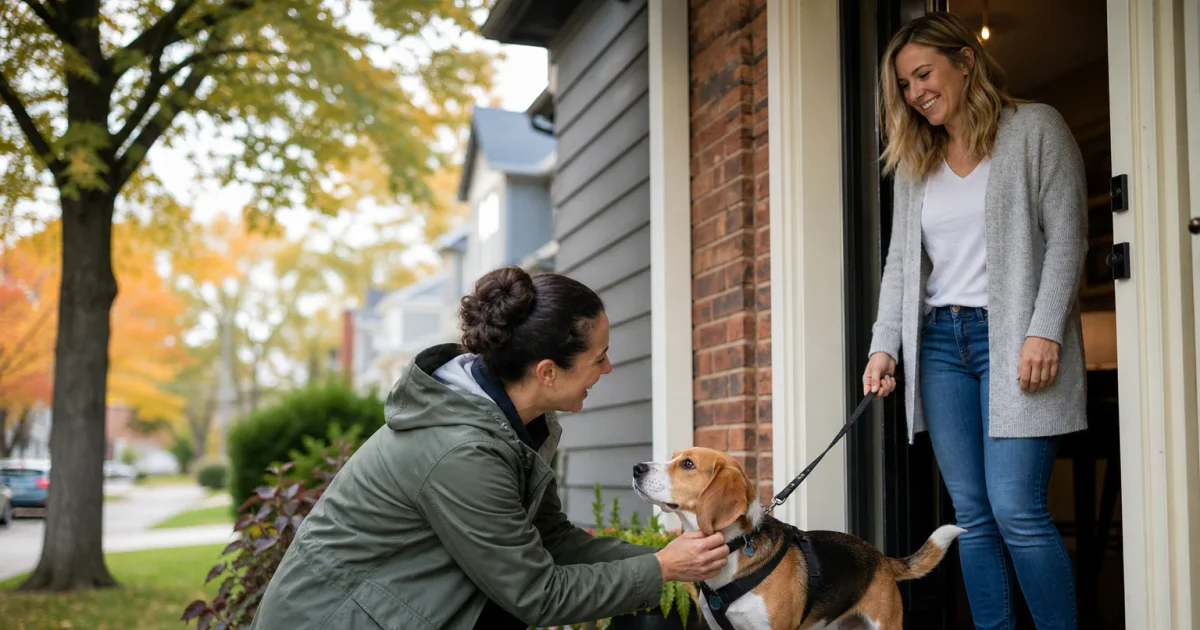
Where local dog walking clients actually come from
You've got a handful of regular dogs, an empty stretch in the middle of your day, and a stack of flyers that produced exactly one call, from someone who wanted a weekend sitter three towns over. You don't need more ideas; you need to know which channels fill weekday slots near your existing routes, and what to do in each one.
The usual marketing lists (a website, social media, directories, flyers, local events) aren't wrong, but they treat every idea as equal. For a local walker, they aren't. Handing a stranger your dog and your house key is a big step, so the channels that tend to work are the ones that borrow trust: a recommendation from a neighbor, a mention from the groomer, a set of recent reviews, a website that answers the questions an owner is nervous about.
Below are five channels worth your time, roughly in the order to tackle them, plus the two parts most guides skip: turning one walk into a regular booking, and knowing which channel actually sent each client.
Start with the people who already know you
Your current clients are your best salespeople, but most won't think to recommend you unless you ask. Pick a moment when they're clearly happy, like when they mention how settled their dog was after a walk, and make the ask specific.
Something like: “I've got two midday spots opening on Tuesdays and Thursdays. If you know anyone nearby whose dog is home alone all day, I'd love an introduction. Here's a card you can pass on.” Named days and a physical card make it easy to act on.
Then widen the circle: neighbors on routes you already walk, owners you chat with at the park, and other walkers. Petcareins suggests asking established walkers to send you the clients they can't take. Walkers turn dogs away when they're full, when an address is off their route, or when a dog needs something they don't offer. Get to know two or three of them, offer to take their overflow, and send yours back when you're full.
Something shareable helps, too. When an owner gets a tidy report card with photos after a walk, they have something to show a friend or coworker, and that's often how a referral starts.
- Ask happy clients directly, naming the days you have free
- Hand over a card they can pass on, not just your number
- Introduce yourself to neighbors on routes you already walk
- Swap overflow with two or three walkers who cover nearby areas
- Thank every referrer personally when the new client books
Build two-way relationships with vets, groomers and trainers
A flyer pinned to one vet's bulletin board won't do much on its own. Petcareins recommends something more deliberate: list around 40 pet businesses in your coverage area (vets, groomers, pet supply stores, training facilities), visit them in person, and go back once a month for three or four months so they remember your face.
Before you walk in cold, ask your existing clients which vet and groomer they use. Being able to say “I walk Biscuit for the Hendersons” turns a stranger with leaflets into someone the front desk already half knows.
Think about what's in it for them. A groomer wants dogs who arrive calm rather than wound up. A trainer wants owners who keep practicing between sessions. A small pet store wants regular local customers. Offer to send your clients their way, mention that you'll reinforce a trainer's cues on walks, and ask whether you can leave a few cards by the register. Don't ask a vet to endorse you. Aim to be a reliable name they can mention when a client asks.
- A stack of cards with your service area and a QR code to your website
- A one-line summary of what you offer and the days you have space
- Names of shared clients you can mention, with their permission
- Something to offer back, like referrals or reinforcing training cues
- A reminder in your calendar to return next month
Give owners a website that answers their questions
When someone hears your name, they'll look you up before they get in touch. Owners are commonly advised to meet a walker in person and to ask about services, credentials and policies before booking. A site that answers those questions upfront saves you both time and shows you're organized before you've said a word.
Write for a worried owner, not a search engine. Plain sentences, real photos of you out with dogs (with their owners' permission), and an obvious way to get in touch will do more than a page stuffed with keywords.
If building a site keeps sliding down your to-do list, Walkies' custom branding gives you an online profile in your own logo and color, so you have a clean page to put on your cards and send to anyone who asks.
- The neighborhoods or streets you cover, stated plainly
- Which services you offer, such as group walks, solo walks or puppy visits
- How your meet-and-greet works and how to book one
- Your key policies, such as cancellations and what happens in bad weather
- The credentials you hold, without overselling them
- A short, honest bio and a photo of you
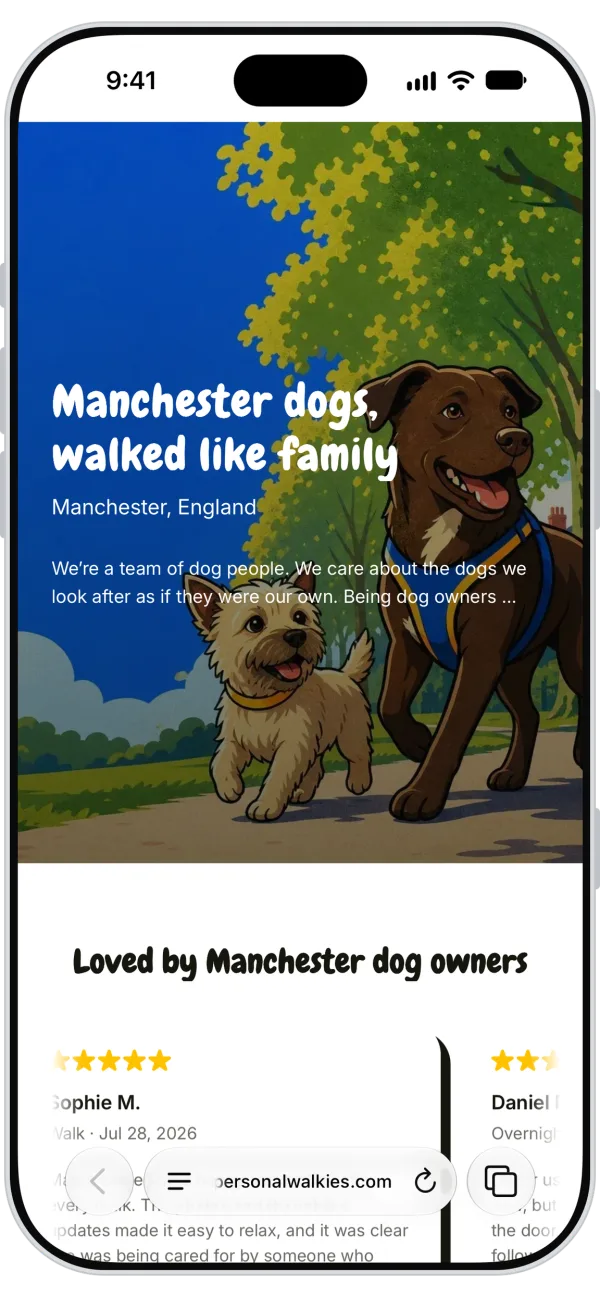
Set up your Google profile and handle reviews properly
Some owners will search for a walker nearby before they ask anyone. A complete Google Business Profile gives you a chance to show up: your service area, hours, services, a short description and real photos. Keep it current, because outdated hours and no recent activity make a business look abandoned. Most walkers don't have a storefront, so follow Google's own help pages for setting up a service-area business.
Reviews are where many walkers either do too little or cut corners. In BrightLocal's 2024 survey of US consumers, 88% said they'd use a business that replies to all its reviews, compared with 47% for a business that doesn't respond at all. Close to half also rated sorting reviews by newest as highly useful, a sign that plenty of people care how recent your reviews are, not just how many you have.
So ask steadily rather than in one burst. Google lets you share a review link or QR code from your profile; put it on your leave-behind card and send it to clients after a few weeks of good walks. Reply to every review briefly and personally, including the occasional critical one, where a calm, specific reply can reassure future clients.
Turn the first walk into a regular booking
An inquiry isn't a client. The steps between the first message and a weekly slot are where you win or lose most of them, and almost nobody plans them.
Take a typical example. Priya messages on Monday evening about her beagle, Max, who's home alone while she's at work. You reply that night and offer two specific meet-and-greet times rather than “whenever suits you.” Specific options get answered; open questions get put off.
Treat the meet-and-greet as the main sales moment. Meet Max, explain how a visit works, and answer the questions about keys, policies and what happens if you're sick. Before you leave, propose a real slot: “I can do Monday, Wednesday and Friday at 12:30, starting with a trial walk next Monday.” Then confirm exactly what happens next.
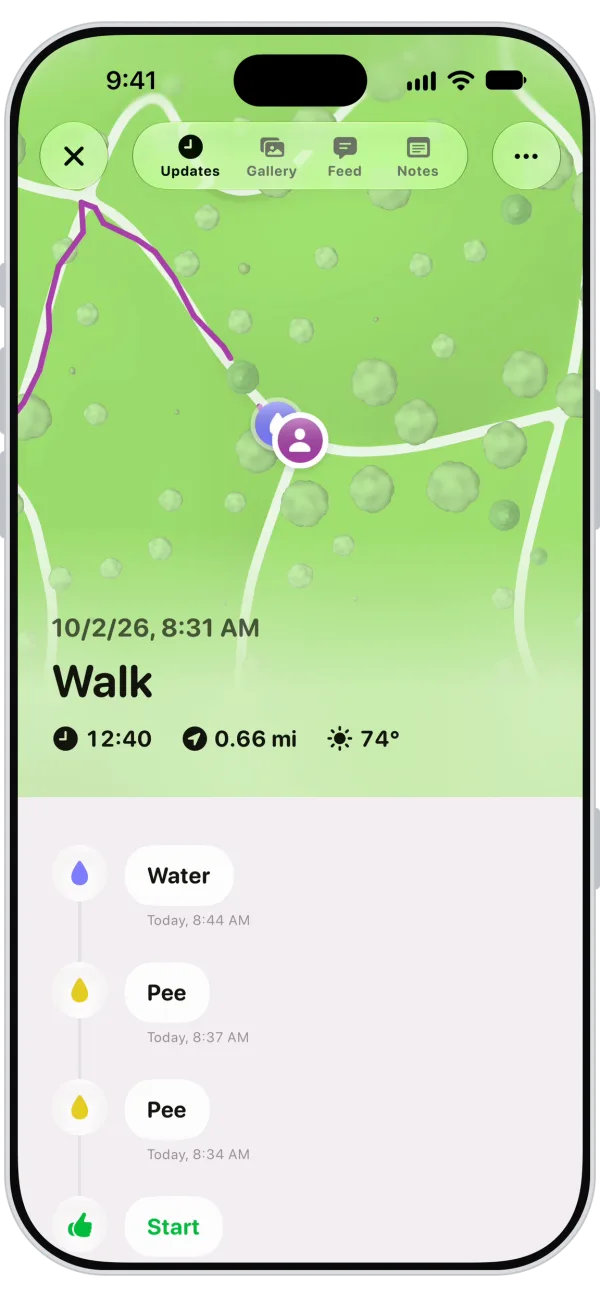
Make the trial walk visible, because owners worry most about the first one. With the free Walkies Journal app, Priya can follow the walk live and see the walk report and photos when you finish, so it feels reassuring rather than a leap of faith.
The next day, send a short message asking how Max settled and whether the slot still works. Keeping these conversations in one inbox means nobody waiting on a reply slips through the cracks.
- Reply to new inquiries the same day
- Offer two specific meet-and-greet times
- Propose a named weekly slot before you leave the meet-and-greet
- Send live updates and a walk report on the trial walk
- Follow up within a day to confirm the regular booking
Track where every inquiry comes from
This is what stops you spending Saturdays on channels that never pay off. Every time someone gets in touch, ask how they heard about you and write it down. A notes app or simple spreadsheet is plenty: date, name, source, and whether they became a regular.
At the end of each month, look at the totals. If the groomer down the road sent three inquiries and the local Facebook group sent none, you know where your next free morning goes. Check conversions too: a channel that sends lots of inquiries that never book may cost more time than it's worth.
After three months you'll have numbers from your own neighborhood, and they'll tell you more than any general guide can, this one included.
- Ask every new inquiry how they found you, and record it
- Note whether each inquiry became a regular client
- Review totals by source at the end of each month
- Put more time into your top two channels next month
- Pause anything that's sent nothing in three months
How long does it take to build a full schedule of dog walking clients?
It depends on your area, local competition and how consistently you work your channels. Steady effort over a few months (regular referral asks, monthly visits to pet businesses, reviews collected as you go) usually matters more than any single big push.
Should I use Rover or Wag to find dog walking clients?
Marketplaces can help with your first few bookings, but their fees and rules differ by country and change over time. Check the platform's own help and pricing pages for your country, and read its terms before inviting marketplace clients to book with you directly.
Do flyers still work for dog walkers?
They tend to work best when someone hands them over for you, like a groomer or pet store that already knows you. Track where each inquiry comes from for a few months and you'll see whether flyers earn their place in your area.
How many reviews do I need before owners take me seriously?
There's no magic number. Recent reviews and thoughtful replies count for a lot, so ask regularly, reply to every review, and never offer anything in exchange for one.