The short answer: there's no single safe number
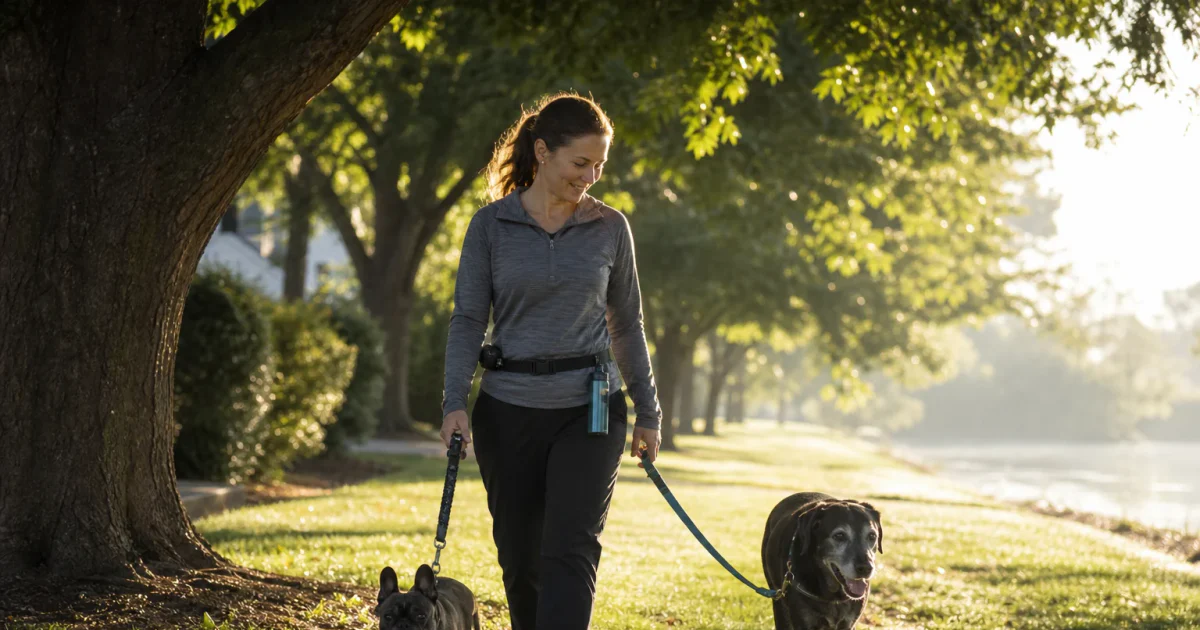
It's 9 a.m., the forecast says 91°F by lunch, and you've got a French Bulldog, a senior Lab and a bouncy young terrier on today's list. You need to decide who walks, when, and for how long, and then explain it to three different owners.
That's the real question behind "is it too hot to walk my dog," and a single temperature won't answer it. A vet quoted by Rover puts the general cutoff at about 90°F. Other owner guides go much lower, some as low as the mid-70s. They aren't necessarily wrong; they're answering for different dogs in different conditions.
What actually decides it is a mix: air temperature, how hot the ground is, how much shade the route has, the time of day, and the dog in front of you. A 75°F afternoon on black asphalt with an overweight Pug can be riskier than an 82°F early morning on a shaded grass trail with a fit, short-coated mixed breed.
It's also worth saying plainly that a dog doesn't need to be running or chasing a ball to overheat. A steady stroll in the heat can be enough, especially for a high-risk dog. So rather than hunting for a magic number, run a quick check for every dog on every hot day.
A five-minute heat check before each walk
Run through this before you clip on the leash. It takes a few minutes and gives you a clear reason for whatever you decide, which matters when you explain it to the owner later.
Treat the pavement test as a rough check, not a precise rule. Local news coverage describes a seven-second version; other guides say ten seconds, and they don't agree on whether to use your palm or the back of your hand. The logic is the same either way: if you can't comfortably hold your hand there, it's too hot for paws. Pavement can be much hotter than the air, so a temperature that feels fine at head height tells you little about paw level.
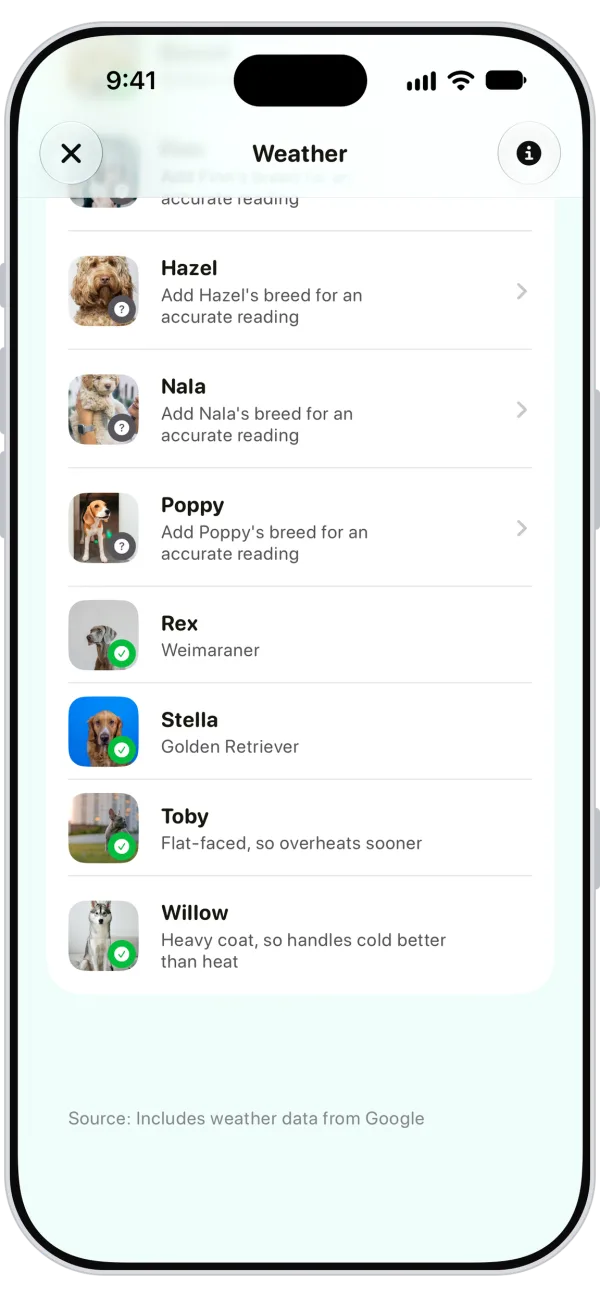
It also helps to see risk graded per dog rather than as one forecast for the whole day. The weather and walk safety view in Walkies shows heat and cold risk for every pet, so the Frenchie and the terrier booked on the same afternoon aren't treated as if they were the same dog.
- Time: is this slot in the hottest part of the day? Can it move earlier or later?
- Ground: will most of the route be asphalt, concrete or sand? Swap in grass and dirt paths where you can.
- Shade: is there tree or building shade for most of the route, not just one stretch?
- The dog: flat-faced, overweight, older, very young, heavy-coated or recovering from illness? Each one lowers your threshold.
- Hand test: hold your hand on the surface for 7 to 10 seconds. Uncomfortable means no.
- Water: enough for every dog, plus a bowl?
- Exit plan: if the dog struggles halfway, where's the nearest shade and the shortest way home?
Which dogs need extra caution
Some dogs cope with heat far worse than others, and your client list almost certainly has a few. The American Veterinary Medical Association notes that flat-faced and overweight dogs may need more frequent rests, shorter walks or a change in walk schedule. That's a handy line to share with an owner who pushes back.
Bulldogs, French Bulldogs and Pugs have shortened airways, which makes panting, their main way of shedding heat, harder work. Extra weight makes every step more effort. Thick or double coats, very large frames, older age and heart or breathing conditions all deserve a lower threshold too.
Don't assume a young, keen dog is fine because it wants to keep going. Enthusiastic dogs often push past the point where they should stop, which leaves the judgment with you. Watch for lagging behind, heading for every patch of shade, or heavy panting that doesn't settle when you pause.
One habit that pays off: mark your high-risk dogs in your notes so they're the first ones you reschedule when a hot spell is forecast, rather than something you remember at the front door.
Reworking your schedule in a hot spell
For a professional walker, most heat problems are really scheduling problems. Animal welfare groups such as Humane World for Animals advise walking in the cooler parts of the day, which is simple advice until you have twelve dogs and only so many cool hours.
Here's a worked example. The forecast shows 92°F by early afternoon. Your usual day has a Frenchie at 11 a.m., a 10-year-old Lab at noon, a young terrier at 1 p.m. and a Husky mix at 2 p.m.
Move the Frenchie and the Lab to 7 a.m. and 7:30 a.m., since they're highest risk. Shift the terrier to 8:30 a.m. on the grass loop by the park. The Husky mix, with its heavy coat, gets a 15-minute shaded potty break at 2 p.m. plus indoor enrichment such as a snuffle mat or scatter feeding (agree anything food-based with the owner first). If you can't fit everyone into the cool hours, the lowest-risk dogs get the later slots, never the other way round.
Your calendar is where this either works or turns into chaos. In Walkies appointments you can move visits around and adjust your availability, so online booking doesn't offer clients the early-afternoon window you've decided to keep clear on extreme days.
Seasonal hours are worth considering too. Some walkers open an earlier first slot through the summer and close the early-afternoon window on the hottest days. It's your business decision, but it's much easier to explain if it's in place before the first heat wave rather than invented during one.
What to tell clients when you shorten or move a walk
The AVMA's advice for anyone walking someone else's dog is straightforward: if you have any doubt about whether it's too hot or too cold to walk, check with the owner. Build on that. Clients rarely mind a shorter walk; what bothers them is finding out afterwards with no explanation.
Set expectations at onboarding with a short heat policy: when you'll shorten walks, when you'll move them, and what a heat-day visit looks like instead. On the day, tell owners before or right after, in plain words, with the reason. A few ready-made messages save you typing the same thing a dozen times.
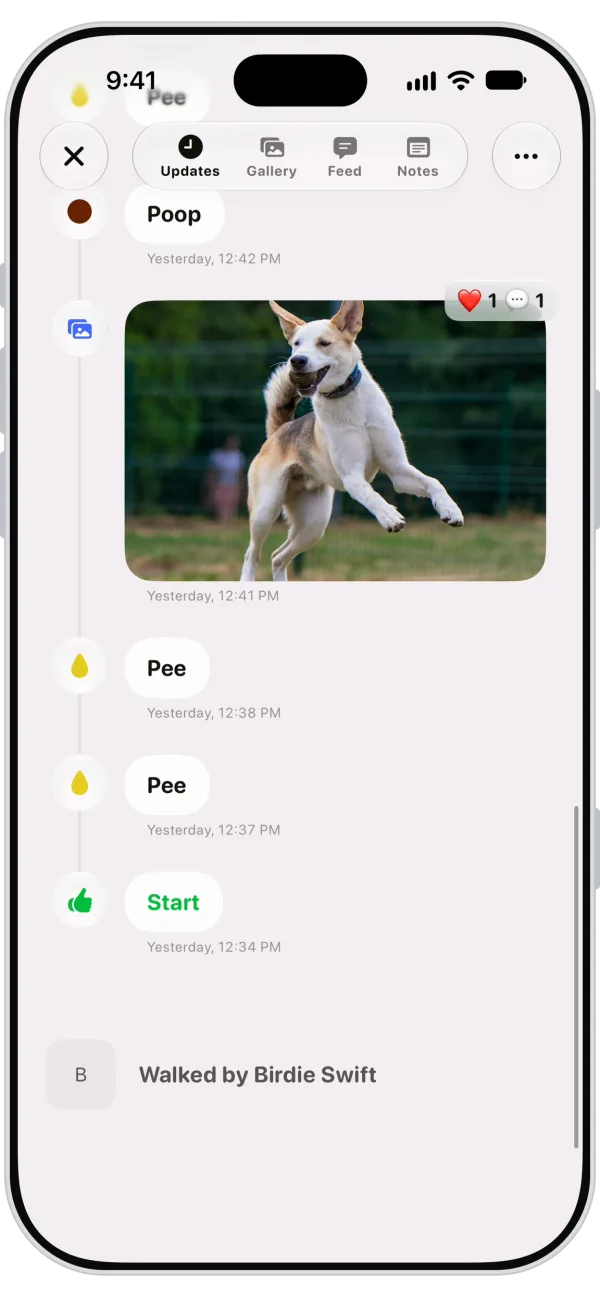
When a whole heat wave is coming, send one notice to everyone. With messaging and client updates in Walkies you can message all clients at once or post a bulletin, then handle replies in one inbox. Clients using the free Walkies Journal app also see the weather on every walk report, which quietly explains why today's walk was 15 minutes instead of 45.
- Shortened: "Hi Sam, it was already 89°F before Bella's walk, so we did 15 minutes on shaded grass instead of our usual loop. She's had water and is resting at home."
- Moved: "Hi Priya, tomorrow's forecast is 93°F, so I'd like to move Otis to 7 a.m. while it's cool. Does that work for you?"
- Swapped: "Hi Dan, it's too hot for Luna's walk today, so she had a quick potty break in the shade and 20 minutes of indoor games. Happy to talk if you'd prefer something different."
- Heat-wave notice: "Heads up: high temperatures are forecast this week. Walks for flat-faced, senior and heavy-coated dogs will move earlier or be shortened. I'll message you if your dog's slot changes."
If a dog seems unwell on a walk
Keep this simple and don't try to diagnose. If a dog seems to be struggling in the heat, stop walking, get into shade and call a vet straight away, then contact the owner. The vet on the phone is the right person to tell you what to do next.
Before summer arrives, gather the numbers you'd need: each client's regular vet and the nearest emergency clinic to your usual routes. Keep them in each client's profile alongside their emergency contacts, so you aren't searching for them with a distressed dog beside you.
Get ahead of the first heat wave
The first hot spell of the year tends to catch everyone out. Dogs haven't adjusted, owners are still in spring routines, and your schedule was built for mild weather. A walk that felt fine last week can suddenly be a problem.
Use a cool week in late spring to prepare, so when the forecast jumps you're adjusting a plan rather than making one up at the door.
- Write a one-paragraph heat policy and share it with every client
- Mark flat-faced, overweight, senior and heavy-coated dogs as high risk
- Choose your early-morning and evening slots for hot days
- Save vet and emergency clinic numbers for every dog
- Prepare your shortened, moved and swapped message templates
- Pack extra water and a collapsible bowl in your walking kit
What temperature is too hot to walk a dog?
There's no single cutoff. A vet quoted by Rover gives about 90°F as a general limit, while other guides go as low as the mid-70s. The dog's breed, weight, age and coat, plus the ground surface, shade and time of day, matter as much as the forecast.
How do I check if the pavement is too hot?
Hold your hand on the surface for about 7 to 10 seconds. If it's uncomfortable, it's too hot for paws. Treat it as a rough check and choose grass or shaded paths on hot days.
Should I tell the owner before I cut a walk short?
If you're unsure whether to walk, yes. The AVMA advises checking with the dog's owner when you have any doubt about the weather. On clear-cut heat days, a short message with the reason and what you did instead keeps clients in the loop.
What can I do instead of a walk on a very hot day?
A brief potty break in the shade, then indoor enrichment such as a snuffle mat, sniffing games or gentle training. Agree any food-based activities with the owner first.